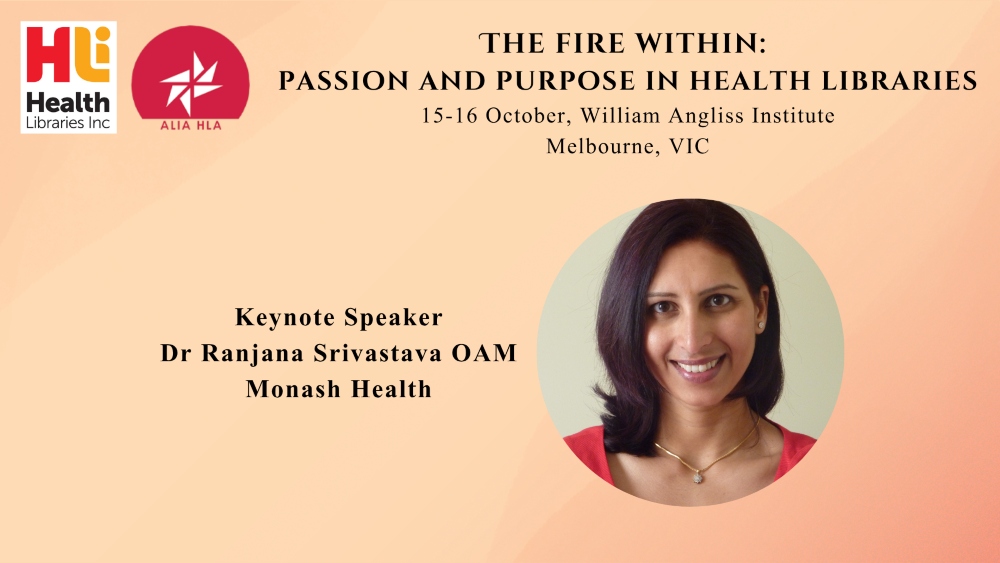
Dr Ranjana Srivastava is an oncologist, Fulbright scholar, and award-winning writer. She is a long-time columnist for The Guardian newspaper where she writes on the intersection of medicine and humanity. Ranjana practices in the Victorian public hospital system and specialises in geriatric oncology, the care of older patients with cancer. She also has a deep interest in the welfare of multicultural and disadvantaged communities.
Ranjana’s two Fulbright awards allowed her to obtain a fellowship in medical ethics at the University of Chicago and a Master in Public Administration at Harvard University.
Among her many awards, Ranjana is the recipient of a Human Rights Literature Prize for her book, Dying for a Chat. She recently won the Kennedy Award for Outstanding Columnist for her writing on compassion in medicine. Her TEDx Talk The Art of Medicine is a thoughtful reflection on the importance of honesty in medicine. Her commitment to ethical medicine saw her receive a Medal of the Order of Australia for her contribution to doctor-patient communication.
A conference doesn’t just happen by itself, and we’d like to thank our Platinum, Gold & Silver sponsors for their support in bringing this year’s joint conference to you.
👉 Please take some time to visit their stands at the Trade Fair in October.
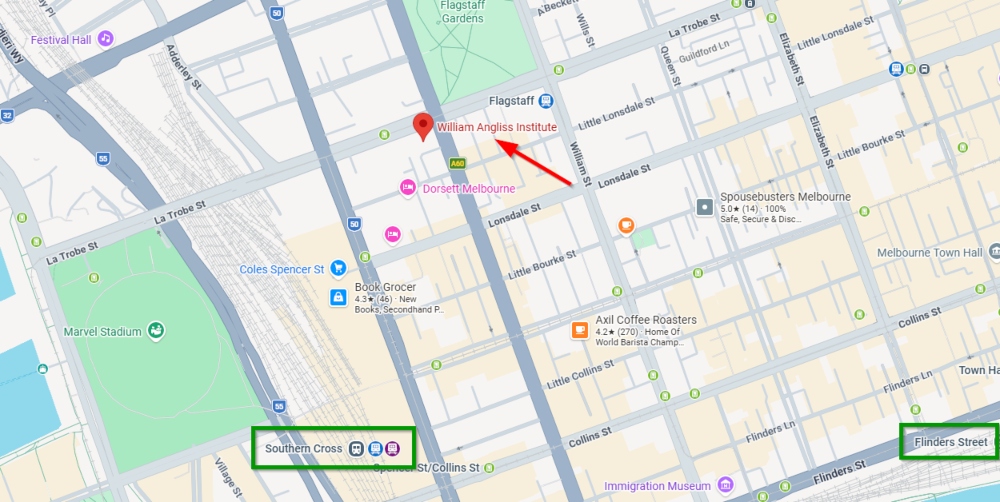
William Angliss Institute Conference Centre Level 5, Building A, 555 La Trobe Street Melbourne, VIC 3000
Time:
Registration and Trade Show opens at 8:30am. Conference starts at 9:00am Thursday & Friday 15 & 16 October, 2026
Transport:
Train: The closest train stations are Flagstaff (just above the red arrow on the map) & Southern Cross (green square on the map)
Trams: Various trams will take you near the William Angliss Institute. Google Maps using Public transport will show the various options from your location. Trips are free within the CBD area. If payment is required, you only tap on at the start of the trip; no need to tap off at the end.
Flights: The red SkyBus can be used from Melbourne Airport to Southern Cross Station
Payments: You can use a credit card to pay by tap on Melbourne trains and trams. Myki cards can also be used.
👩🏫 Trainer: Julie Glanville, Independent UK Consultant in Information Retrieval
💸 Cost: $110 ALIA members; $150 Non-ALIA members (30 max participants)
✍️ Description:
Citation analysis tools have been available for decades and already have a role within systematic reviews. However, with the introduction of new tools and more access to citation indexes, citation analysis may offer new opportunities for assisting with systematic reviews, particularly in reviews of complex questions where searchers may not be confident that their searches are exhaustive. By strategically leveraging citation indexes, you can uncover hidden connections and identify key studies that traditional search methods often miss, especially in rapidly evolving or interdisciplinary fields.
This training course will introduce you to the latest citation analysis tools and innovative techniques. From discovering new research to validating your search strategy, you will learn how to apply these methods to produce a more comprehensive, rigorous, and defensible systematic review.
✔️ HLA Competency Areas:
C1 Health reference & information services
C7 Health research
2026 HLA Competencies can be accessed in the footer of the HLA site (Useful Resources column)
Keren Moskal – Clinical Librarian and Education Lead – Monash Health
💸 Cost: $40 ALIA members; $75 Non-ALIA members (another reason to consider HLA Membership)
✍️ Description:
This hands-on workshop will show you how to use Canva to create engaging and professional videos for library promotion and education resources, and give you guided hands on practice creating your own videos. This session covers:
Editing a Canva video template,
Image and text editing, animations and effects,
Using Canva record and screen capture.
People who have prior experience with Canva will get the most out of this session. There will be hands-on activities. Participants will need access to a Canva account prior to the webinar and have use of a laptop or PC, preferably with a mouse.
✔️ HLA Competency Areas:
C3 Health information literacy and educating for evidence-based inquiry
C8 Health leadership and management
2026 HLA Competencies can be accessed in the footer of the HLA site (Useful Resources column)
The Australasian Evidence Based Practice Librarians’ Institute is entering an exciting new chapter in 2026, marked by fresh leadership, an innovative learning model, and a vibrant updated identity. Reflecting the Institute’s growing reach and engagement across the Asia/Pacific region, AEBPLI has formally transitioned from the Australian Evidence Based Practice Librarians’ Institute to the Australasian Evidence Based Practice Librarians’ Institute, recognising the strong participation and collaboration from colleagues across Australasia.
In response to evolving learning needs, AEBPLI is transitioning to a fully online delivery model in 2026. The program incorporates both synchronous and asynchronous components, providing flexibility for participants to engage with content at their own pace while still benefiting from live sessions, collaborative discussions, and real-time support from tutors and peers. This approach has been carefully designed to maintain the interactive, supportive environment that AEBPLI is known for, while expanding access across Australasia.
AEBPLI 2026 is designed for a broad range of participants, from those who are new to evidence-based practice through to experienced librarians looking to refresh or strengthen their skills. The Institute is ideal for health librarians wanting to build confidence in evidence-based practice concepts, searching, critical appraisal, and teaching, as well as those seeking a contemporary update on current approaches and best practice. The new online format also creates opportunities for people who may previously have been unable to attend due to travel costs, time away from their workplace, or other commitments, making AEBPLI more accessible than ever before.
At the same time, AEBPLI has a refreshed look and feel. This updated identity reflects a modern, engaging aesthetic while preserving the Institute’s core spirit—its sense of community, collaboration, and commitment to excellence in evidence-based practice. The result is a contemporary learning experience that remains true to what participants have always valued about AEBPLI.
We are delighted to introduce our new Convenor team, led by Co-Convenors Nikki May (SA Health Library Service) and Janene Batten (Yale University), supported by Kathryn Ritchie (Central Queensland Hospital and Health Service), Rosie Glynn (Queensland University of Technology), and Tony Courtenay (Cairns and Hinterland Hospital and Health Service). Bringing a wealth of experience and a shared passion for evidence-based practice, this team is committed to building on AEBPLI’s strong foundations while guiding the Institute into its next phase.
Working alongside them is an exceptional team of tutors, Blair Kelly (Deakin University), Mina Nichols-Boyd (Austin Health), Kathryn Rough (Victorian Institute of Forensic Medicine/Australia and New Zealand College of Anaesthetists), Jeph Ko (Flinders University), Mario Sos (Monash University), and Dawn Carlisle (University of Auckland), who are central to the AEBPLI experience. Their expertise, enthusiasm, and commitment to participant learning ensure that the Institute continues to deliver high-quality, practical, and engaging education.
✍️ Register
Expressions of Interest (EOI) for AEBPLI 2026 are now open and will close on 30 June 2026. Registration offers will be sent to the first 24 participants on the EOI list. Successful applicants will have six weeks to complete their registration and submit payment. Any remaining places will then be offered to those on the waiting list, with all remaining waitlisted participants receiving first offer for the 2027 Institute.
🕒 Time
The Institute will be held every Thursday from the week commencing 22 October through to the week ending 26 November 2026.
Sessions will commence at 12:00 pm AEST, 9:00 am WA time, and 2:00 pm NZ time, with each session running for 3 hours for each session, with approx. 2 hours prep time for each session”.
💸 Cost
Registration costs are:
ALIA Members: AUD $500
Non-ALIA Members: AUD $650 (yet another reason – along with 13 others – to consider HLA Membership)
AEBPLI 2026 represents an exciting evolution—honouring its legacy while embracing new opportunities to connect, learn, and grow. We look forward to welcoming participants to this next chapter.
❓Questions
If you have any questions or would like further information on the institute, please don’t hesitate in emailing us at aebpli.convenor@gmail.com