The Australasian Evidence Based Practice Librarians’ Institute is entering an exciting new chapter in 2026, marked by fresh leadership, an innovative learning model, and a vibrant updated identity. Reflecting the Institute’s growing reach and engagement across the Asia/Pacific region, AEBPLI has formally transitioned from the Australian Evidence Based Practice Librarians’ Institute to the Australasian Evidence Based Practice Librarians’ Institute, recognising the strong participation and collaboration from colleagues across Australasia.
In response to evolving learning needs, AEBPLI is transitioning to a fully online delivery model in 2026. The program incorporates both synchronous and asynchronous components, providing flexibility for participants to engage with content at their own pace while still benefiting from live sessions, collaborative discussions, and real-time support from tutors and peers. This approach has been carefully designed to maintain the interactive, supportive environment that AEBPLI is known for, while expanding access across Australasia.
AEBPLI 2026 is designed for a broad range of participants, from those who are new to evidence-based practice through to experienced librarians looking to refresh or strengthen their skills. The Institute is ideal for health librarians wanting to build confidence in evidence-based practice concepts, searching, critical appraisal, and teaching, as well as those seeking a contemporary update on current approaches and best practice. The new online format also creates opportunities for people who may previously have been unable to attend due to travel costs, time away from their workplace, or other commitments, making AEBPLI more accessible than ever before.
At the same time, AEBPLI has a refreshed look and feel. This updated identity reflects a modern, engaging aesthetic while preserving the Institute’s core spirit—its sense of community, collaboration, and commitment to excellence in evidence-based practice. The result is a contemporary learning experience that remains true to what participants have always valued about AEBPLI.
We are delighted to introduce our new Convenor team, led by Co-Convenors Nikki May (SA Health Library Service) and Janene Batten (Yale University), supported by Kathryn Ritchie (Central Queensland Hospital and Health Service), Rosie Glynn (Queensland University of Technology), and Tony Courtenay (Cairns and Hinterland Hospital and Health Service). Bringing a wealth of experience and a shared passion for evidence-based practice, this team is committed to building on AEBPLI’s strong foundations while guiding the Institute into its next phase.
Working alongside them is an exceptional team of tutors, Blair Kelly (Deakin University), Mina Nichols-Boyd (Austin Health), Kathryn Rough (Victorian Institute of Forensic Medicine/Australia and New Zealand College of Anaesthetists), Jeph Ko (Flinders University), Mario Sos (Monash University), and Dawn Carlisle (University of Auckland), who are central to the AEBPLI experience. Their expertise, enthusiasm, and commitment to participant learning ensure that the Institute continues to deliver high-quality, practical, and engaging education.
✍️ Register
Expressions of Interest (EOI) for AEBPLI 2026 are now open and will close on 30 June 2026. Registration offers will be sent to the first 24 participants on the EOI list. Successful applicants will have six weeks to complete their registration and submit payment. Any remaining places will then be offered to those on the waiting list, with all remaining waitlisted participants receiving first offer for the 2027 Institute.
🕒 Time
The Institute will be held every Thursday from the week commencing 22 October through to the week ending 26 November 2026.
Sessions will commence at 12:00 pm AEST, 9:00 am WA time, and 2:00 pm NZ time, with each session running for 3 hours for each session, with approx. 2 hours prep time for each session”.
💸 Cost
Registration costs are:
ALIA Members: AUD $500
Non-ALIA Members: AUD $650 (yet another reason – along with 13 others – to consider HLA Membership)
AEBPLI 2026 represents an exciting evolution—honouring its legacy while embracing new opportunities to connect, learn, and grow. We look forward to welcoming participants to this next chapter.
❓Questions
If you have any questions or would like further information on the institute, please don’t hesitate in emailing us at aebpli.convenor@gmail.com
Justin Clark is running a free 1 hour webinar on TERA Tools
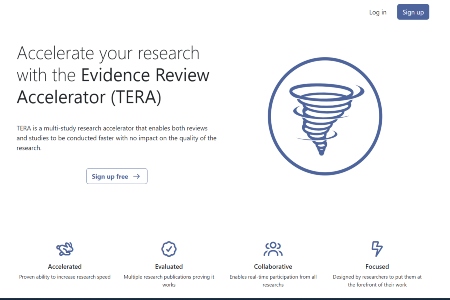
The webinar will cover live demonstrations of all the tools available in the Evidence Review Accelerator (TERA) to help you improve your searching skills & options
Recordings will be available after the event if you cannot attend & also on Tera Tools YouTube
If you would like to refresh your memory or acquaint yourself with any of the tools – so you can ask Justin the really difficult questions he loves – then a selection of TERA videos are available below ⬇️
You can also login or sign up on the TERA Tools home page to play with the tools on offer
Reviews (systematic or scoping) are a great way to answer research questions or summarise evidence on a topic, but they take a long time and are a lot of work. Fortunately, there are now tools and methodological innovations that can help with doing reviews. One of these tools available is the Evidence Review Accelerator (TERA) built in Australia by a team at Bond University. TERA improves the speed of conducting reviews by accelerating all the tasks in a review. This workshop will cover all the tools available in TERA, but will focus on using the tools of most value to information specialist/librarians. Attendees will gain practical experience using TERA quickly design and run precise search strategies, while also gaining background information on the other review tasks to better enable review support at their institution. TERA is available at the following website: https://tera-tools.com/, and a 12-month subscription to TERA is included in the workshop fee.
🗣️ PRESENTER:
The workshop will be presented by Justin Clark, a Research Fellow in Evidence Review Acceleration and lead of the Automation program at the Institute for Evidence-Based Practice (IEBH) at Bond University, Gold Coast Australia. He is also the Cochrane Information Specialist for the Acute Respiratory Infections Group, was a member of the Cochrane Information Specialists Executive and the Co-Lead of the search group of the Living Evidence Network. He is one of the inventors of the Two-Week Systematic Review (2weekSR) method, a founding member of the International Collaboration for the Automation of Systematic Reviews (ICASR) and leads the development of the Evidence Review Accelerator (TERA), a suite of automation tools that accelerate the production of evidence synthesis. His research focuses on improving evidence synthesis methods to reduce the resources needed to conduct reviews of the evidence. For more information about Justin’s research please visit his Research Profile: https://www.scopus.com/authid/detail.uri?authorId=55311800800
💸 COST: ALIA – $120; Non-ALIA – $180
🕧 TIME: 10am – 4pm (face to face)
WHAT TO BRING:
BYO laptop; lunch (or head to nearby eatery at lunchtime)
🌏 WHERE: Face to face in either Melbourne, Brisbane or Sydney
Melbourne
Tuesday May 26th 2026
Royal Australasian College of Surgeons – Skills & Education Space
Jackie Edwards – Murrumbidgee Local Health District
Maddie Beer – Monash Health
Jana is the Manager, Library Services at The Prince Charles Hospital in Brisbane, Queensland. You’ll find her most days trawling medical databases for evidence to support patient care, organisational change, and research. With a background in magazine and technical publishing, she is a big fan of templates and making documents functional but pretty. She has a passion for evidence synthesis methods, working with research teams on reviews and raising awareness of best practice through education and training.
Susie trained as a teacher before completing her Masters in Information Science. She has worked in academic libraries and publishing, and joined Epworth in 2009 where her passion for autodidactism, discovery and access has enabled her to contribute across all domains. EKS is a fully accessible web-based knowledge service which is integrated with Epworth’s clinical, education, research and quality activities. Susie has positioned literature searching as EKS’s premier service for doctors and senior staff, leveraging our expertise in discovery, access and understanding of our requestors’ needs.
Jackie is Library Manager at Murrumbidgee Local Health District, located at Wagga Base Hospital. I support MLHD staff and affiliated students from UNSW Rural Medical School and CSU School of Rural Medicine. I have extensive experience in local government, health, and University libraries. My interests include user experience, digital resources, and research.
Madeleine is a Medical Librarian at Monash Health Library with extensive experience in advanced literature searching to support clinical care, research, and organizational decision-making. She also delivers training webinars to enhance literature searching skills among healthcare professionals.